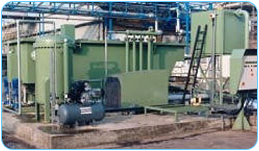
The removal of small particulate matter and oil droplets, for which gravity separation can be extremely slow, requires an alternative process. A method which can be considered in these circumstances is air flotation. In this process, small bubbles of dispersed air are released into the contaminant, attach themselves to the solids or droplets and rise to the surface, taking the contaminants with them
Performance
Typical figures for oil, suspended solids and COD removal would be :
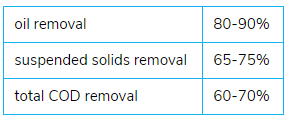
These figures apply to a feed material containing approximately 50 ppm of oil and with influent CODs in the range of 1000 to 10,000 ppm and SSs in the range of 50 to 400 ppm. At lower feed concentrations the performance expressed as a recovery rate is usually much lower.
A DAF is typically installed after a primary screen. The DAF removes the smaller particulate that pass through the screen. A DAF operates on the following principle of pressurizing the water with air to increase the air saturation into the water. The water then flows across a backpressure valve (the pressure is relieved), thereby allowing the air to come out of solution (effervesce) out of the water. This is the same reaction that happens when you open a 7-up bottle and the bubbles come out of solution causing the bubbling. The micro bubbles produced in the DAF adhere to the small particulates in the wastewater. Once the bubble and particle adhere, they quickly float to the surface of the DAF where they are scraped off as a sludge.
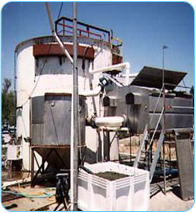
DAF’s have a removal efficiency of up to 95% TSS & 60% BOD, depending on the waste stream particulate and the chemistry involved. Polymers greatly enhance this performance and can yield a higher percent solids in the sludge.