Performance
| Control of the process is automatic and requires very little operator attention. Process equipment maintenance is also minimal and simple. Typical removal efficiencies of waste constituents are: BOD5 . . . . . . . . 97-99.5% Ammonia Nitrogen 90-99% COD . . . . . . . . . . . 85-95% Total Phosphorus . . 90-99% Suspended Solids . . 95-97% Oil & Grease . . . . . . 95-100% 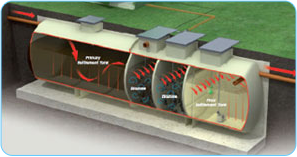 |
The Process
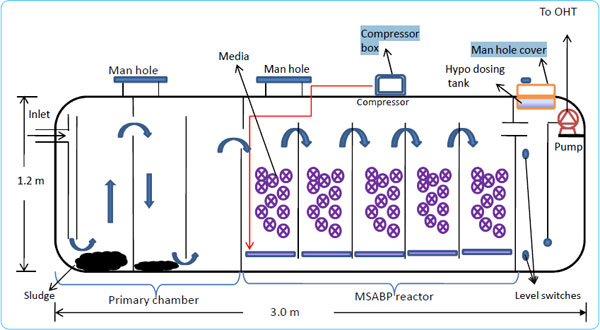
| The MSABP process continuously receives raw wastewater which has been finely screened. The screened wastewater is then fed to the bioreactor. The bioreactor is comprised of multiple stages of aerobic phases. Each stage is supplied with an individually controlled air supply intended for maintaining vital activity of microorganisms and optimum oxygen transfer. A proprietary inner carrier from synthetic material provides immobilization of microorganisms within each stage. Wastewater purified in the bioreactor is directed to further treatment processes such as disinfection. Treated wastewater can then be discharged into the receiving body or for reuse. |
The MINIPAC concept uses the latest MSABP technology
- No filters required.
- No bio sludge generation.
- Sizes suitable for anything.
- Cost and energy efficient using gravity flow.
- The aeration motor and pump are in sealed tank for noise free operation.
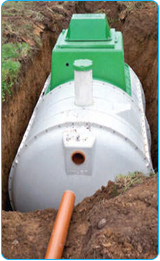
- MDPE tanks prevent external contamination and control odour.
- Large tanks that can operate for years without pumping and handle fluctuating loads.
- Floating media for thorough processing and easy replacement.
- One year free service contract and warranty.
- Very easy to install and completely below the surface or waterline.
- Meet the most stringent effluent emission standards.
- Competitively priced with systems that do much less.
- Solar powered option for remote or ocean operation.
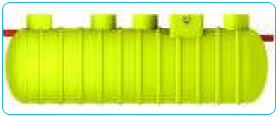
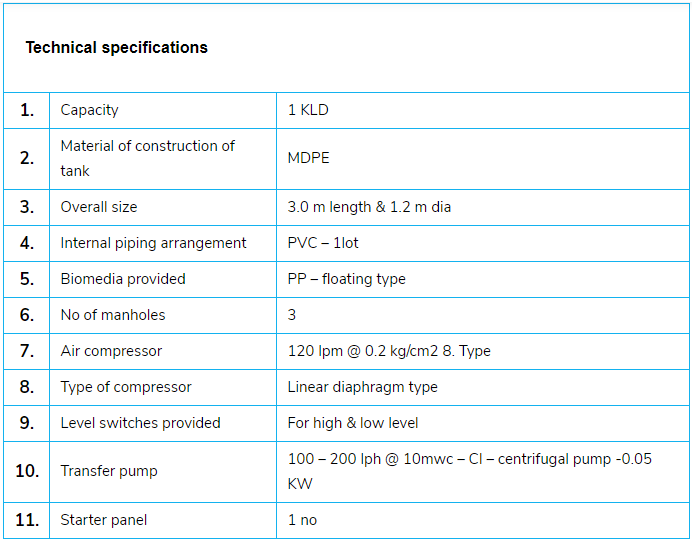
Technical Specification